A distressed debt exchange is a transaction in which a borrower at risk of default replaces existing debt with a package worth less than the original promise. The package might contain new debt, cash or equity. It is one form of liability management exercise. An issuer can use an out-of-court exchange to conserve cash or buy time to refinance. A creditor may accept a smaller promise if it expects to collect more under the new terms than by keeping the old claim.
What changes on USD 100 of debt?
In a fictional exchange, a holder surrenders USD 100 of face value at an 8% annual cash coupon rate for USD 75 of new face at 6%. Assume both balances are constant for the full year being compared and the exchange includes no additional consideration, accrued interest or fees.
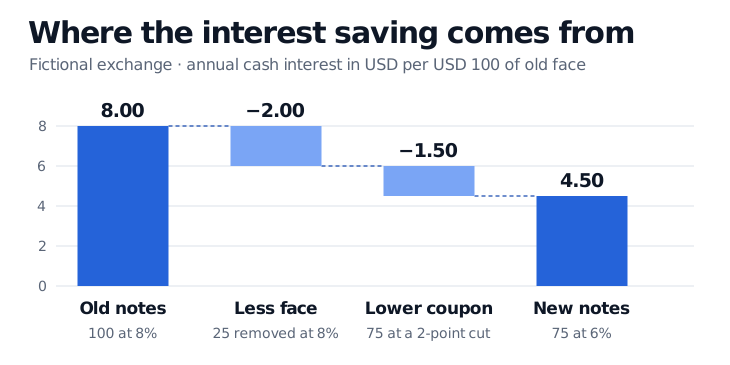
Applying the face reduction first isolates how much of the annual interest saving comes from each change.
The 25% measures the reduction in promised principal. To estimate the creditor's change in value, discount the expected cash flows under each alternative, including recoveries in default scenarios. A later maturity delays principal repayment and can give the issuer time to avoid an immediate funding shortfall. If the new claim is secured debt, the assets pledged and its rank against competing claims shape recovery. The two notes can also trade at different prices per dollar of face because their liquidity and credit risk differ.
In the September 2024 early settlement, Lumen Technologies retired approximately USD 490.8 million of its unsecured notes due from 2026 to 2029 in exchange for USD 438.3 million of new 10% secured notes due in 2032 and USD 13.7 million in cash, excluding accrued interest. S&P Global Ratings classified the exchange as distressed. It judged that the higher coupon and improved priority did not compensate for the maturity extension and the reduction in principal. Lumen Form 8-K, S&P Global Ratings action
What does a holdout keep?
A holder who declines a voluntary exchange generally keeps the old debt. The surviving claim may be less valuable if new debt ranks ahead of it against the same assets or if valid amendments weaken the old covenants or liens. Value that remaining claim under the capital structure after closing, and model a failed exchange separately if closing is uncertain. INNOVATE supplemental indenture, §§ 2.01–2.02
In a U.S. Chapter 11 case, a confirmed plan generally binds creditors who did not accept it. That includes a plan confirmed through cramdown, subject to the statutory requirements and exceptions. 11 U.S.C. § 1129(b), 11 U.S.C. § 1141(a)
When does it count as default?
S&P Global Ratings looks for two conditions. The exchange offers investors less value than the debt originally promised, and there is a realistic chance of conventional default in the near to medium term without the exchange. On completion it rates the affected issues D. It can assign the issuer SD (selective default) if it expects the issuer to keep paying its other obligations. An exchange can meet those criteria even if bondholders tender voluntarily and payments are current. S&P Global Ratings Definitions, paragraphs 220–222 and 229–235
A contractual Event of Default follows the debt agreement, including any relevant notice and cure provisions. A credit event for a credit default swap follows the terms of the swap. For example, where Restructuring applies under the 2014 ISDA definitions, a qualifying change must bind all holders of the relevant obligation. Lumen secured notes indenture, § 5.01, Americas Determinations Committee, iHeart meeting statement, pp. 4–5
The SelfMadeQuant lesson on capital structure compares rank, guarantees and maturity across claims on the same issuer and shows how these differences affect recovery in a hedge. The preview is public and the full lesson requires membership. Capital Structure and Distressed Convertible Hedges
Sources
- S&P Global Ratings Definitions, 16 December 2025
- Lumen Technologies Form 8-K, 24 September 2024
- S&P Global Ratings, Lumen selective default rating action, 2 October 2024
- INNOVATE Corp., supplemental indenture for the old notes, 4 August 2025
- 11 U.S.C. § 1129, Confirmation of plan
- 11 U.S.C. § 1141, Effect of confirmation
- Lumen Technologies, indenture for the new secured notes, 24 September 2024
- Americas Credit Derivatives Determinations Committee, iHeart meeting statement, 21 December 2016