A liability management exercise (LME) is a transaction in which a borrower changes or replaces existing debt, typically outside a formal insolvency process. It can extend maturities, reduce principal or raise liquidity. In a debt exchange, the borrower offers new debt or other consideration for old claims. The same deal can ease a near-term funding shortfall and change who gets paid first if the borrower later defaults.
An exchange creates two claims to analyse
A fictional company has USD 150 million face amount of first-lien notes due in one year. It accepts USD 100 million of those notes for exchange into USD 60 million of new notes due in three years. The new notes take first priority on the same collateral. Assume the required consents validly amend the old notes so that their liens rank behind the new notes. There is no cash consideration or new borrowing apart from the exchange notes, and amounts exclude interest and fees.
The reduction in face value on the exchanged debt is
The remaining holders still have USD 50 million of face due in one year, now with junior liens. Combined face after the exchange is USD 110 million. The 40% applies to the debt surrendered in the exchange. To estimate the value of the new notes, model their coupon and principal on the new dates, along with default scenarios. To estimate recovery, trace how much each class could receive from collateral and any other available sources. The face reduction alone gives neither estimate. An exchange-versus-hold comparison uses the old debt's terms after any effective amendment and models a failed exchange separately.
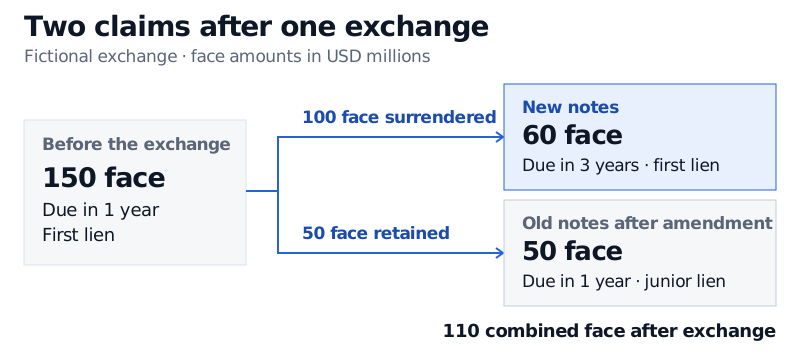
The maturity extension applies to the exchanged debt. The lien amendment changes the priority of the debt left outstanding.
Where the terms come from
The exchange offer specifies which holders can participate, what the issuer will accept and what it will deliver. The new indenture or credit agreement sets the maturity, coupon and guarantees. The security documents identify the assets pledged. An intercreditor agreement can set the order for distributing proceeds from shared collateral and who can enforce the liens. To model the old debt that remains, read its original agreement alongside any effective amendments. A tender can be voluntary while a separately authorised amendment changes the rights attached to notes left outstanding.
INNOVATE Corp. illustrates both steps. Its August 2025 exchange replaced tendered senior secured notes due in February 2026 with new senior secured notes due in February 2027. The signed supplemental indenture for the old notes removed specified covenants and subordinated their liens. The new indenture provided for first-priority liens subject to permitted liens. The collateral trust agreement directed specified proceeds to defined first-out obligations ahead of the new notes. Both indentures use New York law. INNOVATE quarterly filing, Debt, new indenture, §§1.01, 10.01, 13.06 and Exhibit A, old notes supplemental indenture, §§2.01–2.02 and 3.01, collateral trust agreement, §3.4
What makes the change binding?
Consent thresholds can differ by provision. In its opinion revised on 14 February 2025, the U.S. Fifth Circuit held that Serta Simmons Bedding's privately negotiated 2020 exchange did not qualify under the open market purchase exception to pro rata sharing in its New York-law credit agreement. The U.S. Supreme Court denied review on 10 November 2025. The Fifth Circuit's holding turned on the language and structure of that agreement. Fifth Circuit opinion, pp. 8–9 and 27–38, Supreme Court docket 24-1322
A voluntary out-of-court exchange binds participating holders through the exchange terms, with any valid changes to the remaining claims taking effect under their own agreements. A formal restructuring uses a separate legal process. In U.S. Chapter 11, a court-confirmed plan generally binds creditors even if they did not accept it, subject to statutory exceptions. 11 U.S.C. §1141(a)
The SelfMadeQuant lesson on capital structure and distressed convertible hedges applies rank, guarantees and maturity to a comparison of claims on the same issuer. The preview is public and the full lesson requires membership. Capital Structure and Distressed Convertible Hedges
Sources
- INNOVATE Corp. quarterly filing for the period ended 30 September 2025, Debt
- INNOVATE Corp. new senior secured notes indenture, 4 August 2025
- INNOVATE Corp. first supplemental indenture for the old notes, 4 August 2025
- INNOVATE Corp. collateral trust agreement, 4 August 2025
- In re Serta Simmons Bedding, U.S. Court of Appeals for the Fifth Circuit, No. 23-20181 and consolidated appeals, revised 14 February 2025
- Barings LLC v. Excluded Lenders, U.S. Supreme Court docket 24-1322
- 11 U.S.C. §1141, Effect of confirmation