Capitalising a cost means recording it as part of an asset on the balance sheet. Expensing a cost means recognising it in profit or loss. An immediate expense reduces profit in the period incurred. For equipment, depreciation can spread that charge over the asset’s useful life. The timing can change an earnings-based stock screen even when the cash payment is the same. IAS 16, paragraphs 7, 12 and 48–50
What did the spending buy?
Under IFRS, the cost of qualifying property, plant and equipment (PP&E) goes on the balance sheet when future economic benefits are probable and the cost can be measured reliably. The equipment's purchase price and directly attributable installation costs can form part of its cost. Day-to-day servicing goes to expense as incurred. A qualifying replacement part can be capitalised, with the old part's remaining carrying amount removed. The nature of the spending and the applicable recognition rules determine the treatment. IAS 16, paragraphs 7 and 10–17
Two payments of USD 120
Consider two fictional cases at the start of Year 1. One company pays USD 120 for routine servicing completed that day. The other pays USD 120 for qualifying equipment that is ready for use immediately. Assume the equipment is carried at cost less depreciation, with a three-year useful life, zero residual value and straight-line depreciation charged to profit. Set aside taxes, impairment and all other transactions. IAS 16, paragraphs 12, 15, 30, 48–55 and 62
The servicing payment reduces Year 1 profit by USD 120 and leaves no asset. The equipment has an annual depreciation charge of dollars and a Year 1 closing carrying amount of USD 80. Holding everything else equal, Year 1 pre-tax earnings are USD 80 higher in the equipment case. The equipment incurs another USD 40 of depreciation in each of Years 2 and 3 without a further payment for the purchase.
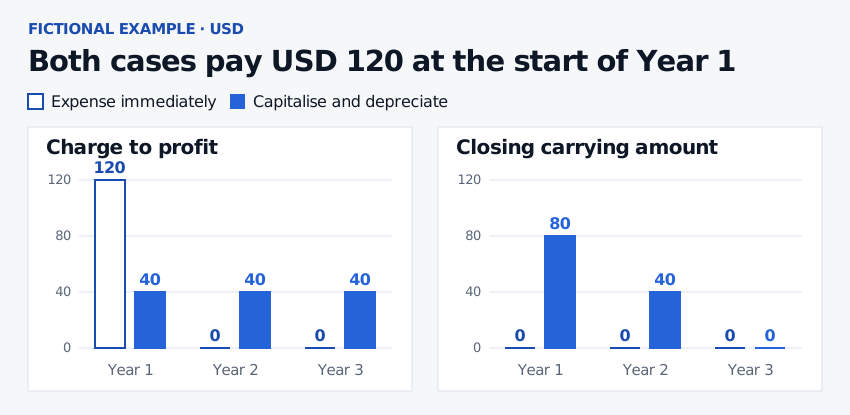
Both cases record USD 120 of total expense over three years. Capitalisation spreads the charge and leaves part of the cost on the balance sheet until later years.
The Year 1 gap is larger for EBITDA, which excludes depreciation. Servicing reduces EBITDA by USD 120. The equipment payment and the subsequent depreciation both sit outside EBITDA.
Follow the cash and the tax separately
In the cash flow statement, the servicing payment reduces cash from operations (CFO) by USD 120. The equipment purchase reduces cash from investing (CFI) by USD 120. Depreciation is a noncash charge. When reconciling profit to CFO under the indirect method, add back depreciation that was deducted in the starting profit figure. In this example, operating cash flow less cash spent on equipment is lower by USD 120 in either case. IAS 7, paragraphs 14(c), 16(a) and 20
Tax law determines when a cost is deductible. For equipment that generates taxable benefits, the tax base reflects the deductions still available as the asset is recovered. If tax depreciation runs faster than book depreciation, the tax base can fall below the book carrying amount and give rise to a deferred tax liability. Estimate the timing of the cash tax benefit from the deductions available under the applicable tax rules. IAS 12, paragraphs 5–7, 15 and 17(b)
When comparing companies, read the PP&E note for additions, depreciation and useful lives. Tie the additions to the equipment payments in the cash flow statement before using them in a free cash flow model. A company can add equipment before it pays for it. For development costs, check the separate rules for capitalised software and R&D. IAS 16, paragraph 73, IAS 7, paragraphs 16(a) and 43–44