Pension funded status is the difference between the fair value of a defined benefit pension plan’s assets and the present value of its benefit obligation on a specified basis and date. The difference measures the surplus or shortfall in currency units. The funded ratio expresses coverage as a percentage of the obligation. An analyst tracking either measure needs to separate changes in assets from changes in the valuation of the benefits. IFRS Foundation, IAS 19 overview
With plan assets and a positive benefit obligation , both valued on the same date for the same plan, the two measures are
A funded status of −30 is a deficit of 30. A funded ratio of 100% means assets equal the obligation on the chosen valuation basis.
What a contribution changes
A fictional single-employer plan has assets of 90 and an obligation of 120, in currency units. Its sponsor pays 20 in cash into the plan. Compare the plan immediately before and after the payment on the same valuation date and basis, with no other movements. Plan assets rise to 110, the deficit narrows from 30 to 10, and the funded ratio rises from 75% to about 91.7%.
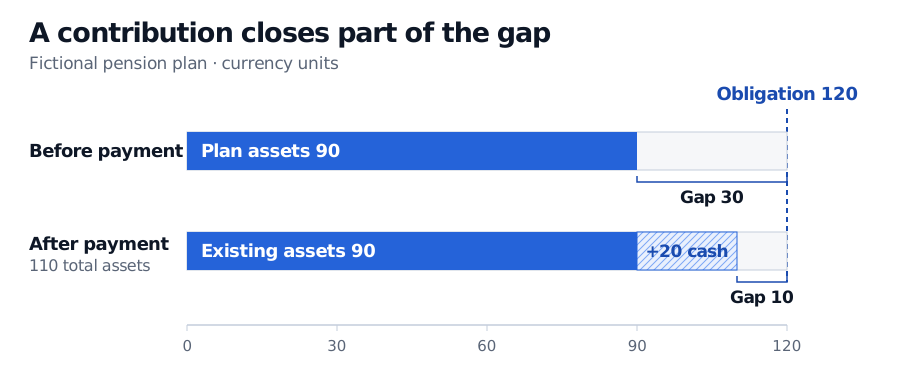
The cash contribution moves the end of the asset bar 20 units closer to the same obligation.
The sponsor has 20 less cash. The plan has 20 more in assets to pay the same benefits. The period’s pension expense follows separate accounting rules. For example, IAS 19 measures service cost and net interest separately from contributions, and contribution timing can affect net interest. The pension note reconciles contributions with the other changes in assets and obligations. Defined benefit pension accounting, AASB 119, paragraphs 120–125 and 140–141
What a change in discount rates can do
A lower discount rate raises the present value of the same projected payments. In a separate illustration, assume one benefit payment of 150 due in ten years, assets fixed at 110, and annual compounding. The obligation is at annual rate . At 5%, the obligation is about 92.09 and the plan has a surplus of 17.91. At 3%, the obligation is about 111.61 and the plan has a deficit of 1.61. In practice, bond holdings can gain value when yields fall and offset some of the increase in the obligation. The net effect depends on how sensitive both sides are to the rate move. AASB 119, paragraphs 83–85 and 145–146
The SelfMadeQuant lesson Key Rate Exposures, Bucket Shifts, and Immunization compares an annuity liability with bond portfolios that respond differently to shifts across the yield curve. The preview is public and the full lesson requires membership.
Match the basis before comparing two figures
Check the plan or group of plans covered, the measurement date, and the definitions of assets and obligations. Under IAS 19 the obligation is the defined benefit obligation. A surplus can exceed the asset the sponsor recognises because IAS 19 limits recognition to the present value of available refunds or reductions in future contributions. For a defined benefit pension under US GAAP, ASC 715 compares plan assets at fair value with the projected benefit obligation (PBO). AASB 119, paragraphs 63–65, FASB, ASC 715-20 disclosures and illustration
A regulatory ratio can differ even on the same date. For example, the annual funding notice for a covered US single-employer plan divides plan-year-end assets by liabilities measured under ERISA’s prescribed valuation rules. Use the sponsor’s pension note for the accounting position and identify the funding rules separately when analysing required cash payments. 29 U.S.C. § 1021(f)(2)(B)
Sources
- IFRS Foundation. IAS 19 Employee Benefits.
- Australian Accounting Standards Board. AASB 119 Employee Benefits, July 2026 compilation.
- Financial Accounting Standards Board. ASU 2018-14, Changes to the Disclosure Requirements for Defined Benefit Plans.
- Office of the Law Revision Counsel. 29 U.S.C. § 1021(f), Defined benefit plan funding notice.