Two different 4× readings
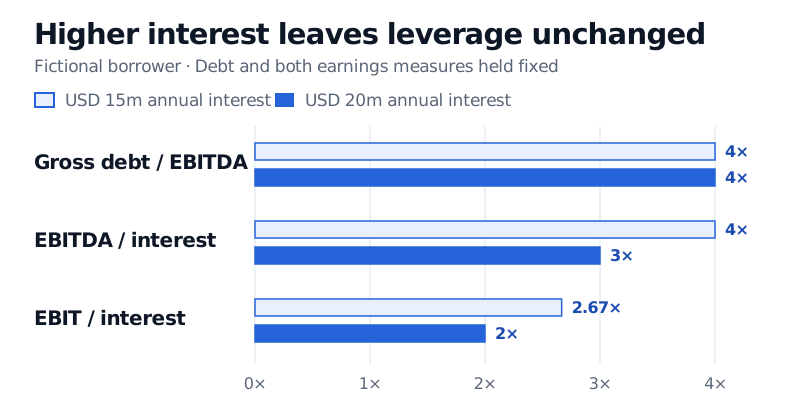
A fictional borrower ends the year with USD 240 million of gross debt. Over the year it earns USD 60 million of EBITDA and USD 40 million of EBIT, and recognises USD 15 million of gross interest expense.
| Ratio | Calculation | Reading |
|---|---|---|
| Gross debt to EBITDA | Debt is four times a year's EBITDA. | |
| EBITDA interest coverage | EBITDA is four times the year's interest expense. | |
| EBIT interest coverage | After depreciation and amortisation, EBIT is about 2.67 times interest expense. |
The two 4× readings move in opposite directions if earnings fall and debt and interest stay fixed. A rise in borrowing costs can separate them even when earnings hold up. If the borrower refinances at a higher rate and the next full year's gross interest expense rises to USD 20 million with the same debt and earnings, both coverage ratios fall while gross leverage stays at 4×.
What counts as debt and interest?
- Dates. Debt is a balance at a point in time. A common leverage calculation takes quarter-end debt over EBITDA for the trailing four quarters. For coverage, use the same window for earnings and interest. A late-quarter borrowing can raise measured leverage immediately while only part of its recurring interest bill has entered trailing coverage.
- Gross and net. Gross debt is measured before deducting cash. Net debt subtracts cash that qualifies under the chosen definition. Gross interest expense is measured before interest income. Net interest expense offsets interest income, so the resulting ratio can mask how much interest is owed to lenders. Cash netting for debt and income netting for interest are separate choices.
- Cash and accrued. Accrued interest expense reflects the period in which the expense is recognised. A measure of interest paid follows the cash payment date. Interest recognised in December and paid in January can therefore land in different reporting periods. Non-cash items such as debt issuance cost amortisation can also separate the two measures.
Zero EBITDA makes debt to EBITDA undefined, and negative EBITDA makes the ordinary leverage ranking misleading. Likewise, coverage is undefined when the interest denominator is zero. If net interest expense turns negative because interest income exceeds expense, report that net interest income separately and use gross expense to assess the borrower's interest burden. Negative EBIT with positive interest expense is a different case. It indicates an earnings loss before interest.
Screening a borrower and testing its contract
Sources
- Federal Reserve, The Information in Interest Coverage Ratios of the US Nonfinancial Corporate Sector (2019)
- Federal Reserve, Monetary Policy Tightening and Debt Servicing Costs of Nonfinancial Companies (2023)
- Alkermes plc, Amendment No. 1 to Credit Agreement (12 August 2026)
- Alkermes plc, Form 10-Q (quarter ended 30 September 2026)