Underwriting profit is what a property and casualty insurer earns from providing cover after deducting incurred claims, claim-handling costs and other underwriting expenses, before investment results and income tax. The combined ratio adds the loss ratio and the underwriting expense ratio. When both use the same earned premium and together include all underwriting costs, 100% is break-even and anything higher is an underwriting loss. Investment income can still leave the insurer with a positive overall result. RLI, 2025 Form 10-K, “Combined Ratio and Statutory Combined Ratio” · Chubb, 2025 Form 10-K, Item 7, “Consolidated Operating Results”
Where 100 of earned premiums goes
A fictional insurer earns 100 in premiums, incurs 62 in claims including loss adjustment expenses, and records 29 in other underwriting expenses, such as acquisition and administration costs. Amounts are in USD millions. Assume no reinsurance, policyholder dividends or other underwriting items. Both ratios use earned premiums for the same period.
For every dollar of earned premium, 91 cents goes towards underwriting costs and 9 cents is underwriting profit. Here, subtracting the combined ratio from 100% gives the 9% underwriting margin because the two calculations use the same premiums and costs.
Why the expense denominator matters
Written premium records the premium booked on policies. Earned premium recognises it as coverage is provided, so the period’s earned amount can include premiums from policies written earlier. Chubb uses net premiums earned for all components of its P&C combined ratio. RLI's U.S. statutory measure divides incurred loss and loss adjustment expenses by net premiums earned, divides other underwriting expenses by net premiums written and includes a separate policyholder dividend ratio. RLI also distinguishes how it accounts for acquisition costs on the two reporting bases. Chubb, 2025 Form 10-K, Item 7 and Note 1(b)–(c) · RLI, 2025 Form 10-K, “Combined Ratio and Statutory Combined Ratio”
Keep the fictional insurer’s costs fixed and suppose its written premiums for the period are 58. The expense ratio on written premiums is , so adding it to the 62% loss ratio gives 112%. The earned-premium underwriting profit is still 9. This calculation isolates the denominator change. For a ratio that mixes denominators, calculate the underwriting margin directly from the underwriting result and the corresponding earned premiums.
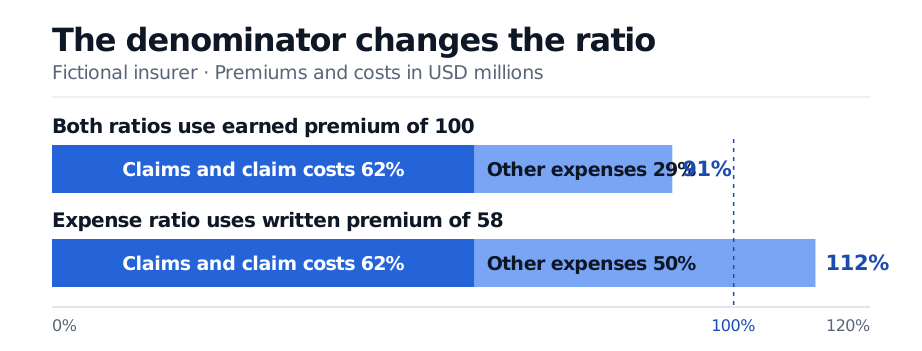
Switching only the expense denominator can push the combined ratio above 100% while the insurer still earns 9 million from underwriting.
What to match between two filings
- Gross or net of reinsurance. Gross figures are before cessions to reinsurers. Net premiums deduct ceded premiums, and net losses deduct ceded claim costs. Use the same basis for premiums and losses. RLI, 2025 Form 10-K, Note 4
- Calendar year or current accident year. Calendar-year incurred claims include revisions booked this year for earlier accidents. Current-accident-year claims are tied to events that occurred this year. Check separately for catastrophe exclusions. Chubb’s current-accident-year measure excluding catastrophes adjusts both losses and related premiums. The reserve note in insurance company financial statements helps trace the prior-year changes. A claims development triangle shows how earlier cohorts mature across valuation dates. Chubb, 2025 Form 10-K, Item 7, “Non-GAAP Financial Measures,” and Note 8