Mortgage defeasance releases a property's mortgage lien by replacing the property with permitted collateral that funds the loan's scheduled payments. The property can then be sold or refinanced free of that lien while the debt stays outstanding. For an investor in a commercial mortgage-backed security, a property sale with defeasance can therefore leave the underlying loan's principal and interest on their original schedule. Fannie Mae fixed-rate defeasance prospectus, pp. 58–59
When can the property be released?
A prepayment lockout is a period when the contract prohibits voluntary early repayment, subject to its specific exceptions. The right to defease can have its own start and end dates. In Fannie Mae's January 2026 fixed-rate defeasance prospectus, the loans are generally locked out of voluntary prepayment for most of the term. A borrower can defease during a specified window and, if the loan has yet to be defeased, can prepay without a premium during the open prepayment period near maturity. Fannie Mae fixed-rate defeasance prospectus, pp. 58–59
The release comes from the pledge of eligible replacement collateral, typically securities such as US Treasuries where permitted. Under Fannie Mae's multifamily servicing guide, the loan documents must permit defeasance, a successor entity assumes the note obligations, and Fannie Mae takes a security interest in the substitute collateral. The property lien is released once the conditions are met. Fannie Mae Multifamily Selling and Servicing Guide, §§218.01–218.03
With a full cash prepayment, the outstanding principal is paid immediately and the future loan payments end. Yield maintenance is a contractual premium that may be due when the borrower prepays. It is intended to compensate for the loss of the scheduled interest stream. The loan documents specify the premium formula, which can use a Treasury benchmark and the remaining yield-maintenance term. The purchase price of defeasance collateral comes from the market prices of the securities used to fund the dated payments. Fannie Mae payoff calculator job aid
Pricing two remaining payments
On the defeasance date, a fictional loan has two future payments to fund. It owes USD 5 at the end of year one and USD 105 at the end of year two, including the final principal. Assume the contract permits exactly dated zero-coupon securities, both available at a flat 4% annual effective rate. To match the cash flows, buy one that pays 5 on the first due date and another that pays 105 on the second. The purchase cost is the sum of the two payments multiplied by their own discount factors.
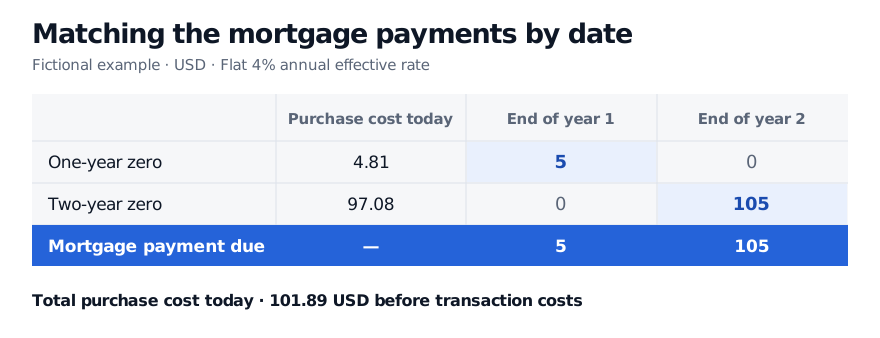
The two zeros fund the mortgage on its two due dates. Their purchase prices use a flat 4% annual effective rate.
A single security paying USD 110 at the end of year two would cover the same total but leave the year-one bill unfunded. With the dates and amounts fixed, lower yields on the eligible securities raise their purchase cost. The USD 101.89 covers the securities in this example. An actual closing can also require legal and servicing costs and loan amounts due separately. Which payments the collateral must cover depends on the closing date and the loan documents. Fannie Mae Multifamily Selling and Servicing Guide, §§218.03H–J
The SelfMadeQuant lesson on bond prices and discount factors shows how to build a portfolio that replicates dated payments, including how Treasury STRIPS work. The preview is public and the full lesson requires membership.