A break fee is a payment the target company owes the buyer if a merger agreement terminates under a specified trigger. A reverse termination fee runs the other way. The buyer pays the target company if a specified buyer-side fee provision applies. The agreement can provide for either fee, both, or neither. In merger arbitrage, the reason a deal breaks determines whether the target pays cash, receives cash, or has no fee to account for in its break value.
One deal, different cash flows
Suppose a fictional agreement values the target’s equity at USD 2 billion. The target owes USD 60 million if it follows the agreed procedures and terminates to accept a qualifying superior bid. The buyer owes USD 80 million if the deal is terminated at the contractual deadline with required antitrust clearance still outstanding and the remaining fee conditions met. The agreement stipulates zero fee for a separate mutual termination scenario.
On the same illustrative equity-value basis, the fee sizes are and . These percentages compare amounts. Whether a fee is due depends on the trigger.
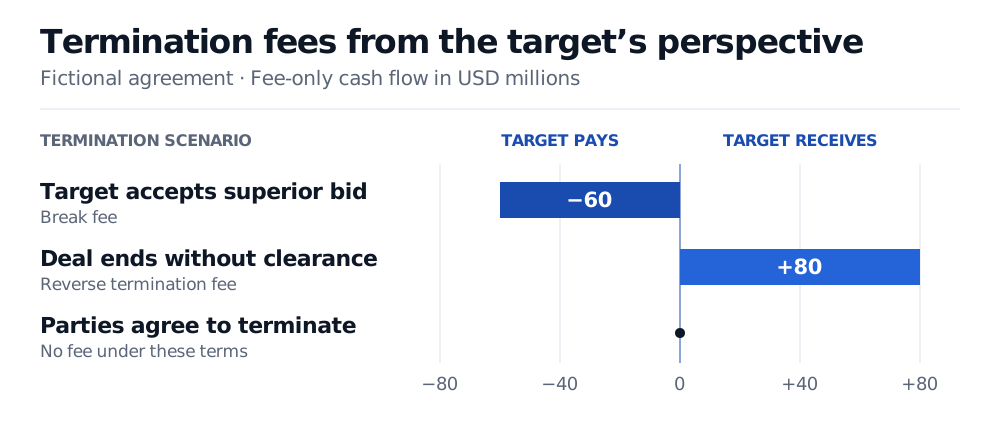
The sign is from the target company’s perspective. Each row is a separate outcome under the fictional agreement.
What the signed agreement can change
In the original January 2022 Microsoft–Activision Blizzard agreement, Activision Blizzard could terminate before shareholder approval to accept a qualifying superior proposal after following the specified process, including giving Microsoft notice and negotiating in good faith if Microsoft requested it in writing. The target fee was payable at that termination. Microsoft’s reverse fee applied on specified antitrust-related terminations, subject to a material-breach exception for Activision Blizzard. For termination at the contractual deadline, the fee provision also required other closing conditions to be satisfied or waived, apart from conditions due at closing that could still be satisfied then. The agreement separately set out efforts and obligations to obtain clearance. Signed agreement, §§ 5.3, 6.2, 8.1 and 8.3
A one-payment limit addresses how often the fee can be charged. A damages cap limits recovery for the claims it covers. A sole-remedy clause can restrict recovery to the fee for the outcomes it specifies. The original Microsoft–Activision Blizzard agreement limited each fee to one payment, preserved liability for willful breach upon termination, and separately provided for specific performance, a court order to enforce the agreement. A July 2023 letter changed the buyer fee schedule and waived certain termination and fee rights. The deal closed on 13 October 2023. Signed agreement, §§ 8.2, 8.3 and 9.8, July letter, § 2, Microsoft closing filing, Item 2.01
From the company’s cash to the share price
The reverse fee goes to the target company. A shareholder’s break value is the estimated value per share after the original deal falls through. In a stand-alone scenario, estimate the target’s equity value and include the fee it expects to collect or pay in that scenario, allowing for timing and any applicable taxes and costs. If a replacement bid is in play, model that bid and its closing risk separately. A large reverse fee can improve the target’s cash position in a qualifying break while the share price still falls below the original offer.
Sources
- Microsoft–Activision Blizzard Agreement and Plan of Merger, 18 January 2022, §§ 5.3, 6.2, 8.1–8.3 and 9.8.
- Microsoft–Activision Blizzard Letter Agreement, 18 July 2023, § 2.
- Microsoft Form 8-K, 13 October 2023, Item 2.01.