A squeeze-out is a compulsory acquisition that lets a takeover bidder buy the remaining shares covered by its offer without the holders’ consent once the applicable legal conditions are met. For a merger arbitrage position, that can mean receiving the deal consideration even if the holder never accepted the offer. The relevant events are the bidder gaining the right to act, exercising it and completing the transfer. UK Companies Act 2006, §§ 979–981
Which shares count?
Under UK Companies Act 2006 § 979, for an offer covering one share class, the bidder generally must acquire or commit unconditionally to acquire at least 90% by value of the shares covered by the offer through acceptances. If those shares carry votes, the bidder must also reach 90% of their voting rights. For an offer covering several classes, the tests apply separately to each class the bidder seeks to squeeze out. Shares the bidder already holds at the offer date are outside the offer base under the statutory definition. The Act has specific counting rules for holdings of associates, contracts to acquire shares and certain purchases outside the offer. UK Companies Act 2006, §§ 974–977 and 979
Suppose a fictional bidder already holds 50 shares and makes an offer for the other 100 qualifying shares. Holders accept for 92 of the 100. The offer acceptance rate by share count is . Adding the bidder’s existing shares to the tally would count 142 shares out of 150, mixing two different groups. The 92% figure describes acceptance on the stipulated share-count basis. Applying the statute would also require the applicable value and voting-rights calculations and the facts about acquisitions, contracts and notices.
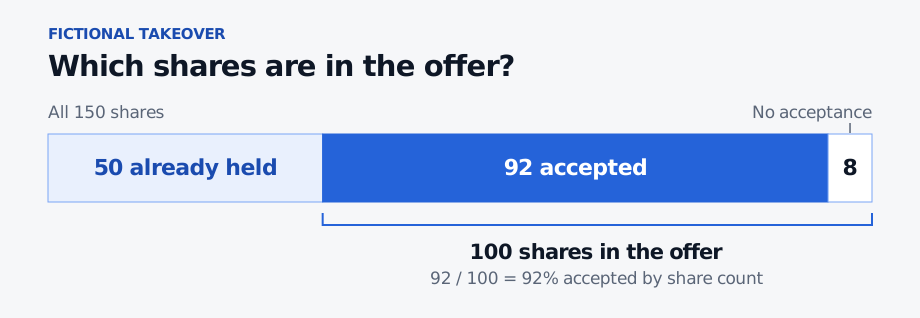
The bracket isolates the 100 shares covered by the fictional offer. Segment widths are proportional to share counts.
A mandatory offer threshold concerns when an investor has to make an offer. The squeeze-out test concerns what the bidder can do once enough of an offer has been taken up.
Who can initiate the transfer?
Squeeze-out. The bidder serves a notice in the prescribed manner and within the statutory time limit. Subject to court intervention, the notice commits the bidder to buy on the offer terms. The recipient has six weeks from the date the notice was given to apply for a court order blocking the compulsory purchase or changing its terms. A pending application can delay the transfer of consideration. UK Companies Act 2006, §§ 980–981 and 986
Sell-out. A remaining shareholder can require the bidder to buy their shares if the separate conditions in § 983 are met. For a holder of voting shares in a whole-company offer, the 90% tests use the value of all the company’s voting shares and the company’s total voting rights. That calculation can include qualifying shares the bidder held before the offer. The holder exercises the right in writing. The deadline is three months from the end of the offer’s acceptance period or, if later, from the date of the required sell-out notice. UK Companies Act 2006, §§ 983–985
When does the position become cash?
In a cash deal, a trading record can show the last executable quote before the residual shares transfer and before cash reaches the holder. Delisting ends the exchange listing. Compulsory acquisition changes who owns the shares. A portfolio or backtest can track the listing change, the transfer and the eventual proceeds separately, carrying a receivable between transfer and payment where appropriate. The Corporate Actions and Survivorship lesson covers that accounting, with a public preview and the full lesson for members.