A banker’s acceptance is a time draft that a bank has accepted, committing it to pay the face amount to the holder at maturity. A time draft is a written order to pay on a specified future date. The bank’s signature gives an exporter a bank obligation it can sell for cash before the importer has to pay. For a money-market investor buying the draft, the accepting bank is the primary payer. OCC, Trade Finance and Services, pp. 6–7 and 77–78.
From shipment to accepted draft
In one common arrangement, the importer asks its bank for a documentary letter of credit that calls for acceptance of a time draft. After shipping the goods, the exporter presents the draft and the required documents, such as a commercial invoice and a bill of lading. The bank checks the documents against the terms of the credit. Once it accepts the draft, it owes the holder payment at maturity even if the importer fails to reimburse it. The importer’s obligation to the bank is separate. OCC, Trade Finance and Services, Appendix C.
The signature matters because handling documents alone gives the bank a different role. In a documents against acceptance collection, the bank releases the documents when the importer accepts the draft. The importer is the payer on that trade acceptance, and the bank acts as a collecting agent. U.S. International Trade Administration, Documentary Collections.
Cash today or face value at maturity
Suppose an exporter sells an accepted draft with a face amount of USD 100,000 to an investor for USD 98,000. The sale gives the exporter cash before maturity and transfers the claim on the bank to the investor. In this fictional trade, the importer reimburses the bank at maturity and the bank pays the investor.
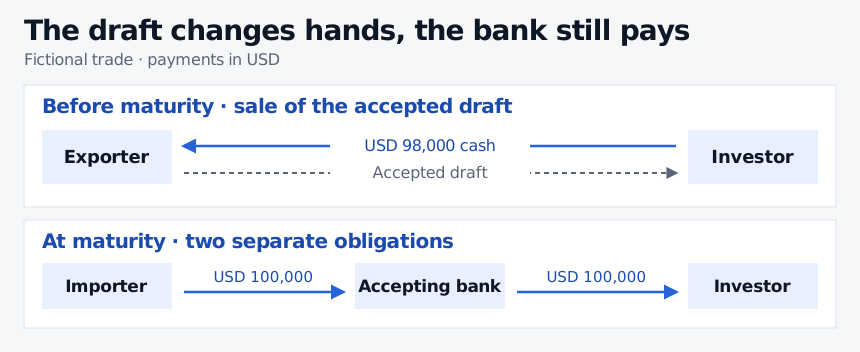
The investor buys the right to receive the bank’s maturity payment. The importer owes reimbursement to the bank.
The investor receives no interim cash flows. If the bank honours the draft in full at maturity, the investor gains USD 2,000 before costs and taxes. The holding-period return uses the purchase price as its denominator.
The USD 2,000 discount is 2% of face value. The investor earned it on USD 98,000 of capital, which explains the slightly higher percentage. Both percentages refer to the interval from purchase to maturity. The SelfMadeQuant Money Markets lesson works through how a bill’s annualised discount quote differs from return on the cash invested. The full lesson requires membership.
If the investor sells before maturity, the resale price determines the gain. A deterioration in the accepting bank’s credit standing can push that price lower even before any missed payment. For the investor, the draft’s credit risk starts with the bank’s ability to pay. For the bank, the financing decision starts with the importer’s ability to reimburse it. OCC, Trade Finance and Services, Appendix B.