A triple-net lease (NNN) is a commercial real estate lease in which the tenant typically bears property taxes, building insurance and maintenance in addition to base rent. In a gross lease, the landlord typically pays these bills out of the agreed rent. The distinction changes which party absorbs an unexpected increase in operating costs. Under a modified gross lease, the parties share costs according to the contract. One arrangement includes a base year’s operating costs in the rent and passes specified increases above that baseline to the tenant. OCC Commercial Real Estate Lending handbook, Appendix G, Rexford Industrial Realty 2025 Annual Report, Leases
Put both leases on the same cash basis
A fictional warehouse has annual base rent of 100 under a triple-net lease, with 10 in property tax, 5 in insurance and 8 in routine maintenance assigned to the tenant. Figures are in USD thousands. The tenant’s outlay for rent and those three bills is . The payment route changes the landlord’s ledger.
- Direct payment. The tenant pays 100 to the owner and 23 to the parties that bill for tax, insurance and maintenance.
- Reimbursement. The landlord pays the 23 and recovers it from the tenant. The landlord receives 123 and pays out 23.
In both cases the landlord’s cash net operating income (NOI) is 100, assuming full and timely collection and no other operating costs. Gross receipts differ even though the same cash remains. Realty Income’s 2025 Form 10-K illustrates the reporting distinction. It includes contractually recoverable costs it incurs in rental revenue as reimbursements, alongside the matching property expenses, and records amounts its tenants pay directly on a net basis. Realty Income 2025 Form 10-K, MD&A and Note 2
Now compare a gross lease at annual rent of 123 with the landlord paying the same 23. It starts at the same tenant outlay and cash NOI. If insurance rises from 5 to 9 while rents and all other costs stay fixed, the higher bill raises the triple-net tenant’s outlay to 127. Under the gross lease the tenant still pays 123 and the landlord’s cash NOI falls to 96.
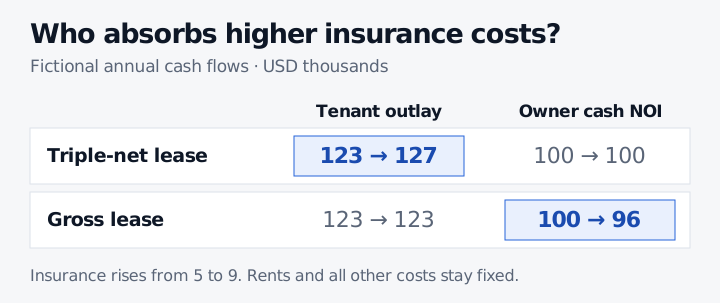
With rents fixed and the extra bill fully recoverable under the triple-net lease, the same insurance increase lands on a different party under each contract.
Read the repair and rent clauses together
The party that arranges a repair can differ from the party that ultimately pays for it. Check the repair clause alongside the definition of recoverable expenses to see whether a roof or structural replacement is excluded or whether specified capital costs can be passed through. The filed West Tech lease assigns roof and foundation repairs to the landlord, subject to exceptions, and has a separate clause defining tenant expense recoveries. It also illustrates two separate forecast lines. The base rent schedule sets contractual increases. Estimated expense payments are reconciled to the tenant’s share of actual costs, with a bill for a shortfall or a credit for overpayment. West Tech lease, summary and §§ 4 and 7, Rexford Industrial Realty 2025 Annual Report, Leases
Expense recoveries make owner cash flow less sensitive to covered bills while the space is occupied and the tenant pays. At default or lease expiry, the landlord can lose rent and reimbursements while taxes, insurance and some maintenance continue. A property forecast therefore needs the tenant’s credit and the lease expiry date as well as the expense split. Realty Income 2025 Form 10-K, Underwriting and Asset Management Strategy