Sukuk are equal-value certificates that represent proportional, undivided interests in assets, rights to use assets, services or investment activities structured under Sharia principles. Lease-based sukuk can have scheduled payments that resemble a bond’s cash flows. To assess their credit risk, identify who owes each payment and what the trustee can enforce if that party defaults. AAOIFI Shari’ah Standard No. 17, §§2–3.
A lease produces one payment. A purchase produces the other.
Consider a fictional one-year ijara (lease) sukuk. An issuing vehicle raises USD 100 per certificate, uses the proceeds to acquire an interest in equipment from an operating company, and leases the equipment back to that company. The vehicle holds the acquired interest for certificateholders. The company uses the equipment and owes the rent.
Assume the company pays one year-end rent of USD 5 per certificate, all of which the vehicle distributes. Under a separate purchase undertaking, the company promises to buy back the equipment interest for USD 100 per certificate when the undertaking is exercised at maturity. If the rent is paid and the purchase settles as agreed, investors receive USD 105 at year-end. The USD 100 scheduled redemption comes from the purchase price. If the company fails to complete the purchase, any recovery depends on the enforcement rights and what can actually be collected.
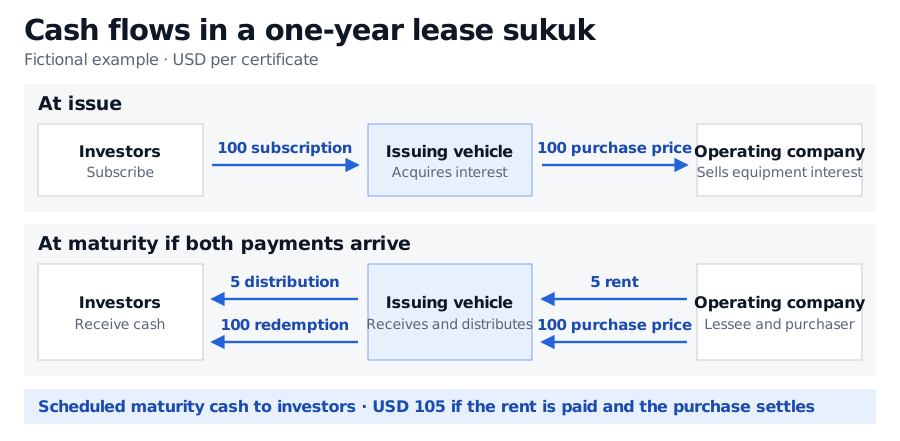
The vehicle passes cash between the parties. The equipment interest and the lease define separate rights from the payments shown. Amounts are fictional USD per certificate.
The annual distribution rate on the USD 100 certificate amount is . At an issue price of USD 100, the scheduled one-year yield to maturity is also , assuming both payments arrive on time and ignoring fees and taxes. The first ratio measures the rent-funded distribution relative to the certificate amount. The second uses the price and both scheduled payments. The enforceable claim matters when estimating loss given default.
What can the trustee enforce?
Asset-based sukuk. In the purchase-undertaking structure, holders may depend primarily on the obligor's contractual payments. The trustee or its delegate may be able to enforce the obligor’s promise to buy the asset interest, while the right to seize or sell the underlying asset can be limited. The obligor’s ability to pay and the enforceability of its promises drive the credit analysis.
Asset-backed sukuk. An effective transfer isolates the relevant asset interests from the originator’s insolvency estate and gives the trustee enforceable rights over them for holders. A true sale is a transfer that holds up as a sale against the originator’s creditors in insolvency. Recovery depends on the income or net proceeds the trustee can realise from the transferred interests, subject to the contractual priority of claims and any credit support. If the originator is also the tenant, its ability to pay rent can still matter. IFSB-7, §§1.2 and 1.5.2.
In either structure, check exactly which rights pass to the vehicle, who can exercise them after default, and which law governs enforcement. IFSB-19, paragraphs 103–106 and 108–115.
The UAE Treasury Sukuk Programme’s June 2026 memorandum shows how this distinction appears in offering documents. The programme can combine lease rentals with deferred sale-price instalments. Its purchase undertaking covers specified rights to use the assets, and the memorandum limits how the trustee, delegate and certificateholders can dispose of trust assets. The delegate’s recourse to the government is to enforce its obligations under the transaction documents. UAE Treasury Sukuk Programme Information Memorandum, pp. 2–3 and Condition 13.
The Credit Instruments, PD/LGD/EAD, and Rating Migration lesson separates the chance of default from the severity of a loss once default occurs. The preview is public and the full lesson requires membership.
Sources
- AAOIFI Shari’ah Standard No. 17, Investment Sukuk
- IFSB-7, Capital Adequacy Requirements for Sukuk, Securitisations and Real Estate Investment (2009), structural descriptions
- IFSB-19, Guiding Principles on Disclosure Requirements for Islamic Capital Market Products (2017), Principle S.3
- UAE Treasury Sukuk Programme Information Memorandum, 17 June 2026