An investment consultant advises an institutional investor, such as a pension fund, on how to invest its assets. A consultant can recommend a strategic asset allocation, research which managers could implement it and help the investor monitor the results. That work can shape both the portfolio’s risk and which managers reach the shortlist. In the advisory model described by the UK Pensions Regulator, trustees make the strategic decisions and appointed managers make day-to-day investment decisions within their remit. Choose an investment governance model
What a 60/40 proposal tells the board
Suppose a consultant proposes a fully invested mix of 60% equities and 40% bonds for a fictional pension portfolio valued at 200 units. At that valuation, the two target amounts are units in equities and units in bonds.
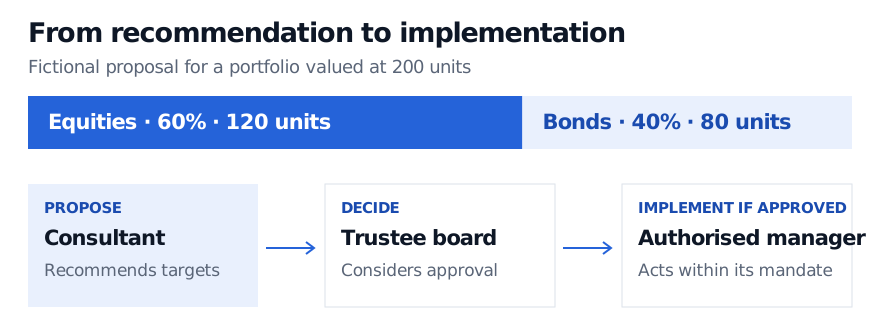
Fictional advisory model. Bar widths show proposed shares of portfolio value. Approval and implementation are separate steps.
The targets describe where the portfolio would end up if the proposal were approved and implemented at that valuation. To size a trade, the manager needs current holdings and a current valuation. The proposed split alone gives neither the direction nor the size of any orders.
From shortlist to oversight
Before the board appoints a manager, the consultant can compare candidates’ investment processes, fees and ability to work within the proposed investment mandate. After appointment, monitoring can compare performance and risk with the agreed objectives and investigate changes in exposures or fees. For example, a manager’s strong past returns may say little about fit if they came from exposures the mandate would restrict. Set objectives for your investment consultant
Under fiduciary management, the institution delegates implementation decisions within an agreed scope. That scope can include selecting managers and putting the strategy into effect for some or all of the assets. A firm that provides both consulting and fiduciary management can have a commercial interest when it advises on whether to delegate to its own service. The UK Pensions Regulator discusses this conflict alongside its examples of different governance arrangements. Choose an investment governance model
The SelfMadeQuant Portfolio Constraints lesson shows how long-only and sector limits affect what an appointed manager can hold. The full lesson requires membership and has a public preview.
Sources
- The Pensions Regulator. Choose an investment governance model. Advisory and fiduciary governance models and conflicts of interest. Checked 8 November 2026.
- The Pensions Regulator. Set objectives for your investment consultant. Typical services for defined benefit schemes, including manager due diligence and risk and performance monitoring. Checked 8 November 2026.